
Showing posts with label presentation. Show all posts
Showing posts with label presentation. Show all posts
Monday, 27 January 2020

Tuesday, 28 May 2019
Subject and object questions
Most questions are object questions. They ask about an object.
SOME MORE EXERCISES:
- Where do you live?
- Who did you see?
- Who plays football in this class?
- What happened?
- Which machine did Marconi invent?
| Form | Examples |
| Object Questions wh- + auxiliary + subject + main verb | Where do you live? What will you do? When is she coming? |
| Subject Questions wh- (=subject) + auxiliary + main verb Notice that this structure is like affirmative sentence structure without the question word. | Who loves you? Which car will arrive first? What type of food costs less? |
SOME MORE EXERCISES:
Thursday, 9 May 2019
Sunday, 20 January 2019
Food in Britain
There are several aspects of food and eating in Britain that are shocking or at least surprising for a Spaniard:

- Meal times and names:

 |
| Marmite by Malcolm Farmer |
- Large breakfasts. A proper traditional breakfast might include fried eggs, sausage, baked beans, bacon, toast, fried tomatoes, mushrooms, toast or fried bread ... and, of course, a cup of tea or coffee. However, nowadays, most people in Britain just have a simpler breakfast with cereal, toast, a cup of tea or coffee and some juice. A "nice cuppa" refers to a cup of tea.
- Many people will drink tea or coffee while having a meal, instead of drinking water. It might be difficult to imagine someone eating soup while drinking soup, but not from a Briton.
- Almost anything can be eaten on toast: beans, Marmite, egg, tomato, cheese...
- Tea is the national drink. It is drunk at all meals, any time of the day and any time of the year, not just for the meal called "tea".
- There are also some foods that may seem strange to foreigners:
- haggis
- Scotch eggs
- Toad in the hole
- black pudding
- Welsh rarebit
- Fish and chips. If you don't know what to eat any time, you may pop into a fish and chips shop and buy your dinner there.
 |
| Tea time at Lucy's by MrsWoman |
 |
| Penny Lane fish and chips shop by Loco Steve |
 |
| Fish and chips by Richard Allaway |
READ MORE:
- Project Britain
- 21 Things Everyone Should Know Before Visiting Britain
- British Etiquette for International Students
- British Habits That Confuse the Rest Of the World
- British Food Habits That Americans Will Never Understand
- Ten Strange British Foods
- Food Quirks That British People Don't Realise Are Weird
https://britainexplorer.com/ten-strange-british-foods/
https://www.buzzfeed.com/tabathaleggett/food-quirks-that-british-people-dont-realise-are-weird
Sunday, 13 January 2019
Comparatives and superlatives
These next weeks we are going to study comparative and superlative structures in our classes. This chart summarizes the main points that you have to keep in mind:


If you want to download the worksheet used in class, click here and if you want to check if you already know this grammar structure, you may try:

If you want to download the worksheet used in class, click here and if you want to check if you already know this grammar structure, you may try:
- Summary of grammar and exercise (the sheet at the top)
- more detailed grammar rules
- exercise sheet
- this Hot Potatoes exercise.
- geography quizz
- crosswords from the BBC Learning English website
- English at home: grammar summary
- English at home: online exercise
- Englisch-hilfen comparatives 1
- Englisch-hilfen comparatives 2
- Englisch-hilfen superlatives 1
- Englisch-hilfen superlatives 2
- Englisch-hilfen as...as
- learnenglishfeelgood.com online exercise
- a selection of exercises from tolearnenglish.com
- basic comparatives: grammar and exercise from English at Home
- British Council: modifying comparatives
- Comparatives exercise (English at Home)
- Superlatives exercise (English at Home)
Now try comparing the pairs and groups of elements in this presentation:
Last exercise: Compare the people in this picture:

Last exercise: Compare the people in this picture:

Friday, 28 December 2018
Thursday, 27 December 2018
Wednesday, 26 December 2018
Monday, 10 December 2018
Friday, 9 November 2018
Relative sentences
RELATIVE PRONOUNS

OMISSION OF THE RELATIVE PRONOUN
To understand the distinctions between that and which it is necessary to understand defining (restrictive) and non-defining (non-restrictive) clauses.
- who → when we talk about people
- which → when we talk about things
- whose → instead of his/her or their
- We also use that for who/which.
- where → when we speak about places
- when → when we speak about a period of time
OMISSION OF THE RELATIVE PRONOUN
We leave out the relative pronoun (who/which/that) if it is not the subject in the sentence.
- That is the book I like.
- He is the teacher who spoke to us yesterday morning.
| 1st part of the sentence | 2nd part of the sentence | ||||
|---|---|---|---|---|---|
| This | is | the boy | who | was | at the party yesterday. |
| Subject | Verb | Rest | Subject | Verb | Rest |
who is subject in the sentence, do not leave it out.
| 1st part of the sentence | Pronoun | 2nd part of the sentence | ||||
|---|---|---|---|---|---|---|
| This | is | the boy | who | I | met | at the party yesterday. |
| This | is | the boy | can be left out | I | met | at the party yesterday. |
| Subject | Verb | Rest | Subject | Verb | Rest | |
who is not subject in the sentence, it can be left out.
Examples with the relative pronoun which/that
| 1stpart of the sentence | 2nd part of the sentence | ||||
|---|---|---|---|---|---|
| This | is | the bike | which | was | in the shop window. |
| Subject | Verb | Rest | Subject | Verb | Rest |
which is subject in the sentence, do not leave it out.
| 1st part of the sentence | Pronoun | 2nd part of the sentence | |||||
|---|---|---|---|---|---|---|---|
| This | is | the bike | which | I | bought | yesterday. | |
| This | is | the bike | can be left out | I | bought | yesterday. | |
| Subject | Verb | Rest | Subject | Verb | Rest | ||
which is not subject in the sentence, it can be left out.
TYPES OF RELATIVE CLAUSES
 |
| http://4thgradeela.weebly.com/uploads/2/0/7/7/20771340/5289752_orig.jpg |
Learning these distinctions is one technical aspect of grammar that every user of English should understand, because it is at the root of an assortment of grammatical errors.
NON DEFINING RELATIVE CLAUSES
A non-defining, or non-restrictive, clause is one that can be regarded as parenthetical:
- My house, which has a blue door, needs painting.
The italicized words are effectively an aside and could be deleted. The real point of the sentence is that the house needs painting; the blue door is incidental.
Use commas to set off non-defining elements, which contribute to, but do not determine, the meaning of the sentence. These elements may be clauses (groups of words that contain a subject and a verb) or phrases (groups of words that do not contain both a subject and a verb).
DEFINING RELATIVE CLAUSES
A defining, restrictive, clause is one that is essential to the sense of the sentence.
- My house that has a blue door needs painting.
Defining clauses or phrases are not separated off with commas. A restrictive clause or phrase is essential to the meaning of the sentence; it defines the word it modifies by ›restricting‹ its meaning. Eliminating a restrictive element from a sentence changes its meaning dramatically.
EXERCISES
EXERCISES
- who / which / whose 1 (Englisch Hilfen)
- who / which / whose 2 (Englisch Hilfen)
- who / whose / which 3 (English for You)
- who / which / whose (Ego4you)
- Link sentences with that / who (Perfect English Grammar)
- who / which / that / where / when (Montse Morales)
- Write the sentences in order-at the bottom (British Council)
- Merge two sentences using a relative clause (Ego4you)
Thursday, 8 November 2018
Sunday, 28 October 2018

Friday, 26 October 2018
Friday, 5 October 2018
Monday, 1 October 2018
Sunday, 6 May 2018
Monday, 30 April 2018
Health at CPI Tino Grandío
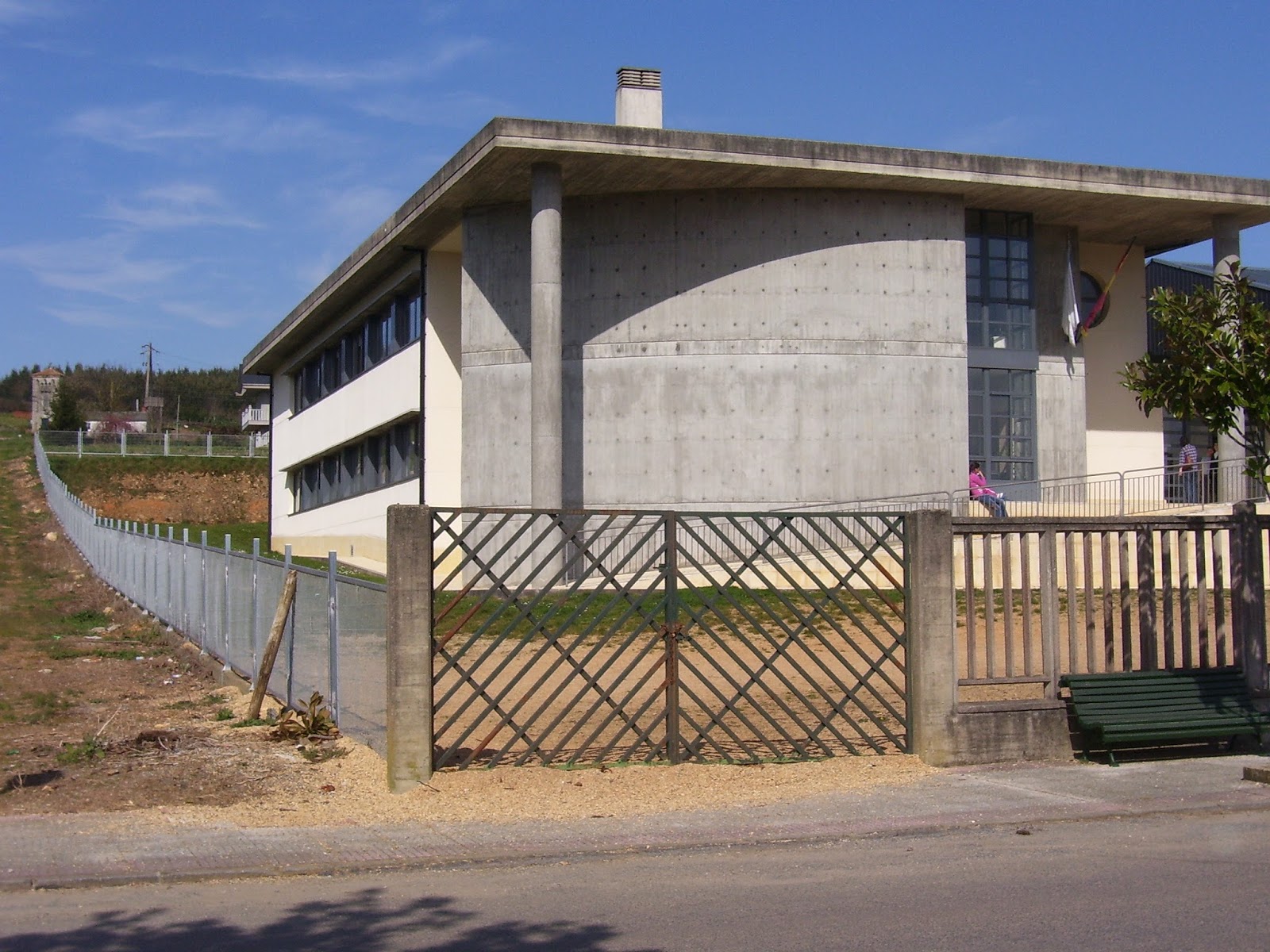 Today we are going to write a summar of the graphs and data in this presentation. Have a look at the graphs and then summarize the most important ideas they contain.
Although there is only information about the ESO levels, you can also mention the differences between boys and girls. Download the pdf document with all the data and graphs.
- THE ONLINE PRESENTATION (choose one slide and work on it)
- THE DOCUMENT WITH ALL THE DATA AND GRAPHS (download it to work more easily)
Wednesday, 25 April 2018
Today's eTwinning session
FOR ALL OUR STUDENTS:

- MY HEALTHY LIFESTYLE MOTTO - students and teachers create their mottos with canva.com. The mottos should motivate the members of the project and inspire to lead a healthy way of living - until the end of April.
- WORD ART IMAGES dedicated to partners' healthy lifestyle (made with wordart.com) - until the middle of May.
- COMMUNICATION in the forum that corresponds to your group
GROUP 1 - Two activities (Silvia Vázquez)
- Presentation about healthy eating. Please use one slide for each healthy eating habit (for example one for eating 5 times a day, another one for eating fruit, etc.) This is the link: https://docs.google.com/presentation/d/1XCiRjcSGhgZqUpHUYELwxusUPRct9QiBIk5mM97FpYw/edit?usp=sharing Feel free to change the template, add your own pictures, etc. DO NOT change other people's work. Rather add a note with your comments.:-D
- Padlet about healthy eating. Write short notes about minor tips or advice on how to improve your food and eating habits.
GROUP 2 - Two activities (Pablo Pérez, Patricia García, Silvia Méndez)
- Presentation about unhealthy eating. Please use one slide for each unhealthy eating habit that you can think of (for example one for eating just once a day, another one for not eating fruit, etc.) This is the link: https://docs.google.com/presentation/d/1LYDkYDEEgLA4GioMyw6GMlTNA9hXX5BSe04ZDEhmxsM/edit?usp=sharing Feel free to change the template, add your own pictures, etc. DO NOT change other people's work. Rather add a note with your comments.:-D
- Padlet about unhealthy eating. Write short notes about minor tips or advice on how to improve your food and eating habits.
GROUP 3 (Antía Vázquez, Mario Gayoso)
- Presentation about Sport in our Life. We will investigate advantages of doing sport and its influence on the quality of our life . Our task is to create several pages in the document on how doing sport can improve our life and make it much better . We may mention not only professional sport but also people's amateur efforts or just regular activities.Here is the link: https://docs.google.com/presentation/d/1zWtmOEkXc_4V1oRowdRrZNsZd9ARPNizDDuPrtqvZ6k/edit?usp=sharing
GROUP 4 (Samuel Fernández)
- Our topic is
- 'Unhealthy habits'.
- We will make a presentation on Unhealthy habits which a person may develop and what negative impact can they have on person's life. This work is aimed on Students' research so that they'll realise negative consequences of harmful habits to avoid them in the future.
- Here is the link:
- https://docs.google.com/presentation/d/1glGvSYN56dlADFBtd-T7-35tUVbSNniclXeDjF7BRnI/edit?usp=sharing
GROUP 5 (Tania Rodríguez)
- Presentation about Healthy Entertainment: https://docs.google.com/
presentation/d/1KafD- vlp2l6VX3RCnVtiCgyGDVm2DpaDyNI _fDb8rDQ/edit#slide=id. g3843e23bc8_0_206
- PADLET: AN EXTRACT FROM MY DIARY - describe in details and illustrate your healthy habits of the day chosen.
GROUP 6 (Jennifer López)
- AN INSPIRING e-mail MESSAGE (write a message to any person in the project and convince him/ her that healthy life is worth living. You can use phrases for giving advice and write the examples to prove your advice is right). Write your email here: https://docs.google.com/presen
tation/d/1KafD-vlp2l6VX3RCnVti CgyGDVm2DpaDyNI_fDb8rDQ/edit# slide=id.g3843e23bc8_0_206 - Think of and suggest two-four questions to the questionnaire to find out about project partners' habits to spend their free time/ ways of entertainment and present it on etwinning. Here is the link for the questions: https://docs.google.com/
presentation/d/1Xtc4K014K6- ZWBvqIQYNtACyJ3yw8usEyJtmtEWVM xg/edit#slide=id.g3845cd517c_ 0_134
Subscribe to:
Posts (Atom)